


.png)

CatalogIt is designed to support the day-to-day work of museums, not just store information. Using information from your CMS to generate forms helps streamline your work, keeps everything connected, and saves time while helping to prevent mistakes.
Using CatalogIt, it’s simple to generate Outgoing Loan Forms, Deed of Gift Agreements, and Temporary Custody Agreements using the records you already maintain. Outgoing loans are the most straightforward: you are lending objects that are already fully cataloged in your collection to a single borrower. Follow your usual process for creating a Loan Out Profile, including the purpose, exhibition dates, and loan conditions, and be sure your object records are updated with current insurance values and condition reports. Once linked to the Loan Out Profile, you can generate the Outgoing Loan Form and make any small edits needed for that specific loan.
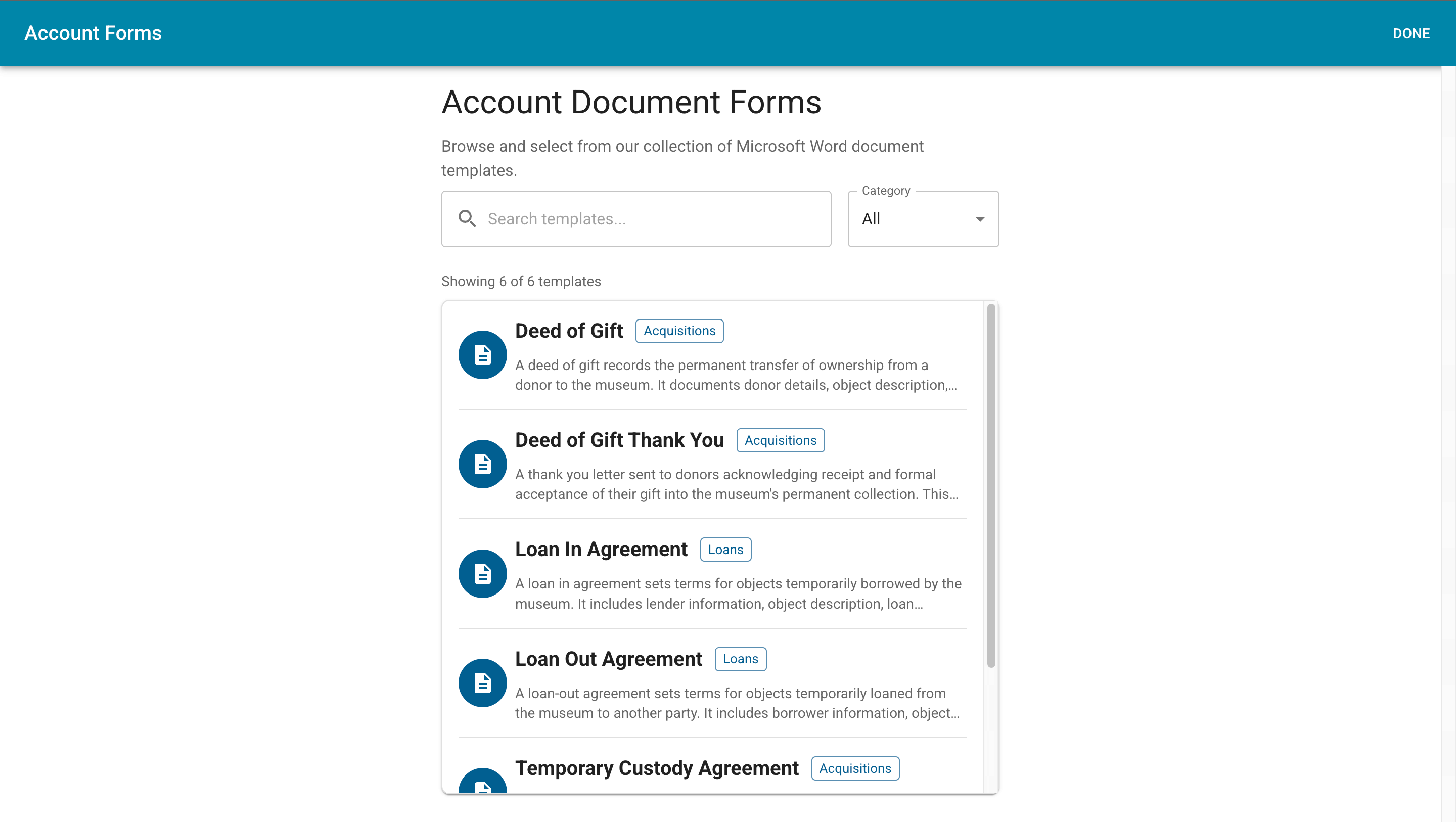
Deed of Gift Agreements require a slightly different approach, since objects are not accessioned until they are physically accepted and accompanied by a legal document. In CatalogIt, the Gift Agreement pulls from the Accession Profile and the Object Record, along with donor information from either the Person or Organization Profile. Start by entering all available information into the Accession Profile. If detailed object information is not yet available, you can still generate the form using the Accession Profile alone. This will populate your institutional details, credit line, and conditions while leaving object fields blank for you to complete later. Because the form downloads as a fully editable .docx file, you can customize it, leave space for the donor to fill in information, or handwrite details when the object is present.
The same flexible process applies to Temporary Custody Agreements. Use the information available in the profile and object record to generate the form, then edit as needed to add missing details. You can also leave space on the document for the depositor to complete or update once the object is in hand. In each case, CatalogIt enables you to create clear, professional forms using the information you already have, without starting from scratch.
When your forms are connected to the same records you rely on every day, paperwork becomes faster, clearer, and far less repetitive. With CatalogIt doing the heavy lifting behind the scenes, you can spend more time focusing on your collections and less time rebuilding information you’ve already entered.
For in-depth information on form creation, visit our MasterIt article, "Creating Collections Forms with CatalogIt," or explore our support page for additional guidance.