

Home to one of the most significant hotel art and artifact collections in the United States, the Mauna Kea Beach Hotel opened in 1965 with more than 1,000 culturally important art and artifact objects from across Asia and the South Pacific, with records that had evolved across decades of hardcopy spreadsheets and differing processes. By adopting CatalogIt in 2024, the team created a “single source of truth” for the collection, streamlined restoration, movement, and insurance workflows, and laid the foundation for an innovative guest experience powered by the CatalogIt API and art collection engagement app Smartify.
.jpg)
Perched along the Kohala Coast on the Island of Hawaiʻi, the Mauna Kea Beach Hotel is one of Hawaii's most storied luxury resorts. Founded by Laurance S. Rockefeller, the mid-century modern property opened in 1965 and quickly became a landmark of Hawaiian hospitality.
Rockefeller curated more than 1,000 art objects and artifacts from Asia, Hawaii, and the South Pacific, including centuries-old granite Buddha, Hawaiian quilts, an extensive south pacific bark cloth collection, a 19th-century Japanese temple bell, and more, integrating them throughout the hotel's public spaces to create the first collection of its kind displayed this way in the United States. That legacy was later preserved through a million-dollar partnership with Honolulu's Bishop Museum and local conservation organizations. "Rockefeller wanted the art to feel accessible, like you’re in your own living room with no signage, which in modern terms, included QR codes," said Charles Watson, a Consultant with Island Eclectic who was selected for the project of modernizing the collection's documentation, restoration, and management. "It's not behind glass and it's not untouchable.”
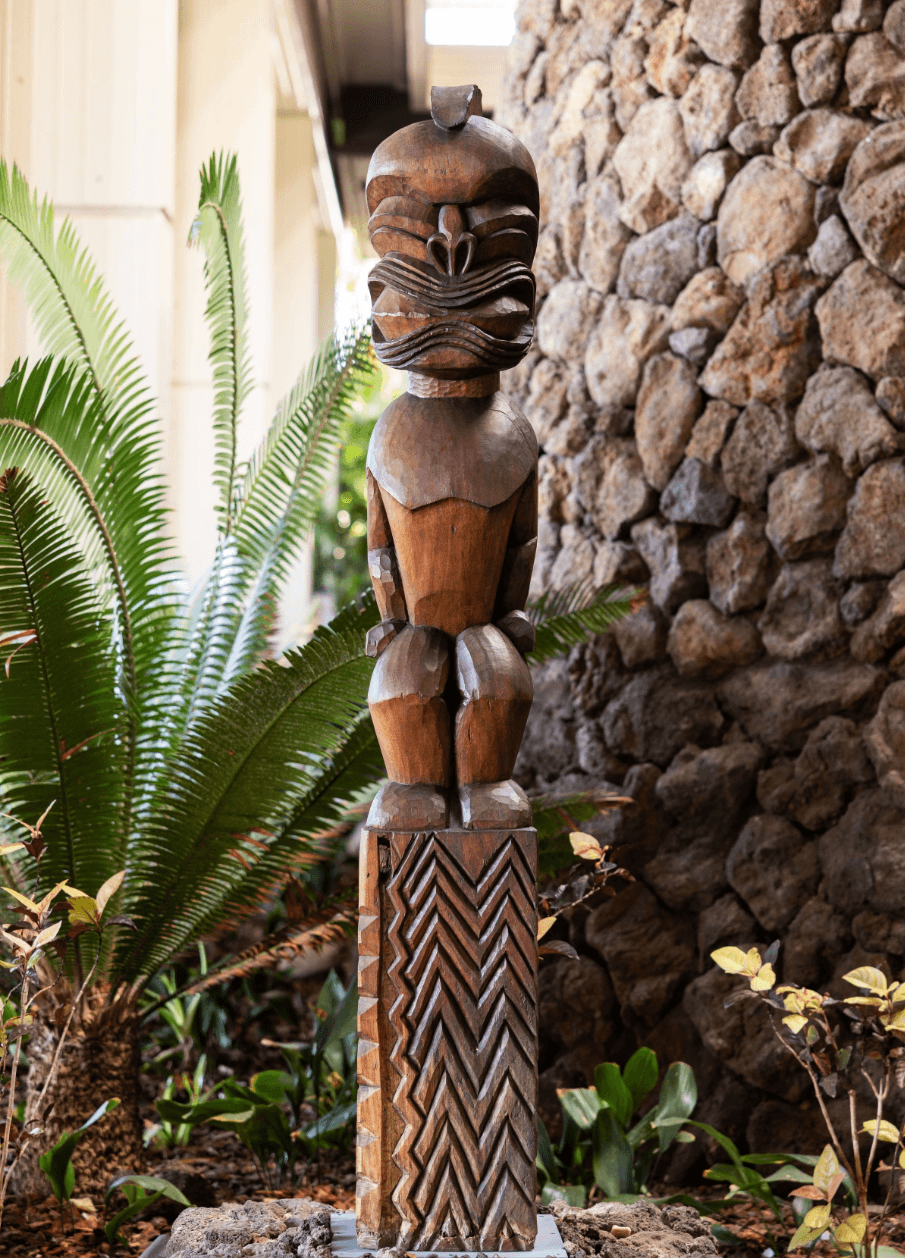
When the Island Eclectic team began the project of centralizing all information related to each Mauna Kea collection object in 2023, the scope of the work ahead came into focus quickly. Record-keeping had evolved into a patchwork of independently maintained spreadsheets—a reflection of a living collection that had grown, moved, and been managed across decades. That same year, wildfires on Hawaiʻi Island destroyed a warehouse containing an estimated hundreds of art and artifact objects, and the fragmented records made it difficult to determine what had truly been lost. A planned major hotel renovation added further reason to implement a centralized inventory management system, with pieces moving constantly between the beach wing, main tower, workshop and storage. Island Eclectic made the case for a dedicated collections management system (CMS): one that would “further unlock the potential in the collection and streamline all aspects of working with the collection.”
After evaluating several platforms, Island Eclectic and the Mauna Kea Beach Hotel selected CatalogIt. They appreciated that CatalogIt could import the hotel's existing spreadsheets, Bishop Museum data, and appraisal PDFs without starting from scratch. They also valued the ability to photograph and upload photos of the entire collection directly from a mobile device—a practical necessity for a sprawling, active property. And CatalogIt’s API unlocked something larger: the foundation for a guest engagement project integrating with Smartify, a mobile guest engagement app, that would further help bring Rockefeller's original vision to life.
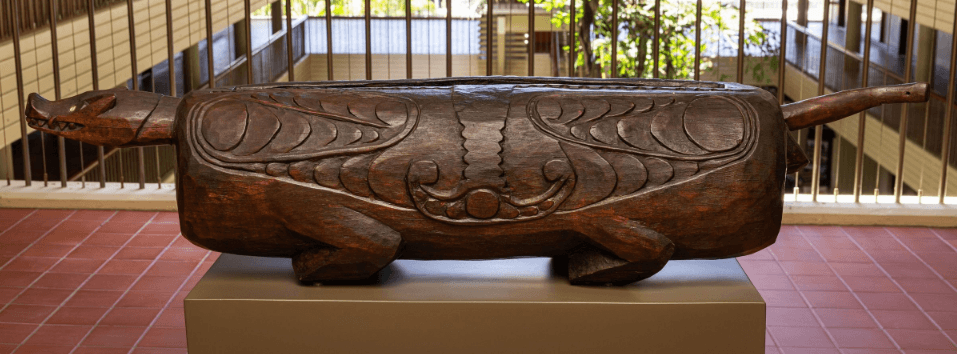
The implementation of CatalogIt started with processing and unifying all the data. “We had to first normalize all the existing data across the different spreadsheets, then merge all the spreadsheets into a single, large table.” Charles said. From there, the Island Eclectic team de-duplicated the information and standardized the records so each contained consistent information. They were then able to import a comprehensive set of records into CatalogIt before scanning documents associated with each object, importing historic photographs, and re-photographing each object with a mobile phone to create a current, high-resolution image for easy identification.
The implementation process proved as clarifying as it was revealing. "We really bottomed out the collection," Charles shared, "and discovered there were pieces that everybody thought were missing that actually weren't missing, but just offline in storage. We also found that there were quite a few objects that people thought were in storage, but were actually missing." This reconciliation of records provided a more complete picture of the collection than had ever existed before. The result was a comprehensive inventory with provenance notes, condition and conservation records, location data, and photography—all in one place for the first time.
Having CatalogIt in place quickly proved its value for day-to-day collection management during the hotel’s nearly $240 million renovation. With the Island Eclectic team constantly moving objects between locations on the property to accommodate construction, CatalogIt became the system of record, ensuring every move was logged and every object could be easily located and returned to its original location. "Just being able to track where everything had been before and where it was in this moment…that alone made CatalogIt shine. This could have been done by adding column after column to a table, but the management and use of that table would have been a nightmare, especially on mobile," explained Charles.
The benefits extended to insurance as well. With appraisals, conservation, photography, and location data all living in one place, the insurance renewal process was transformed. What had previously required assembling records from a dozen different sources became a streamlined, push-button workflow. "We've now done a few insurance cycles, and CatalogIt has made that process super easy!” shared Charles.
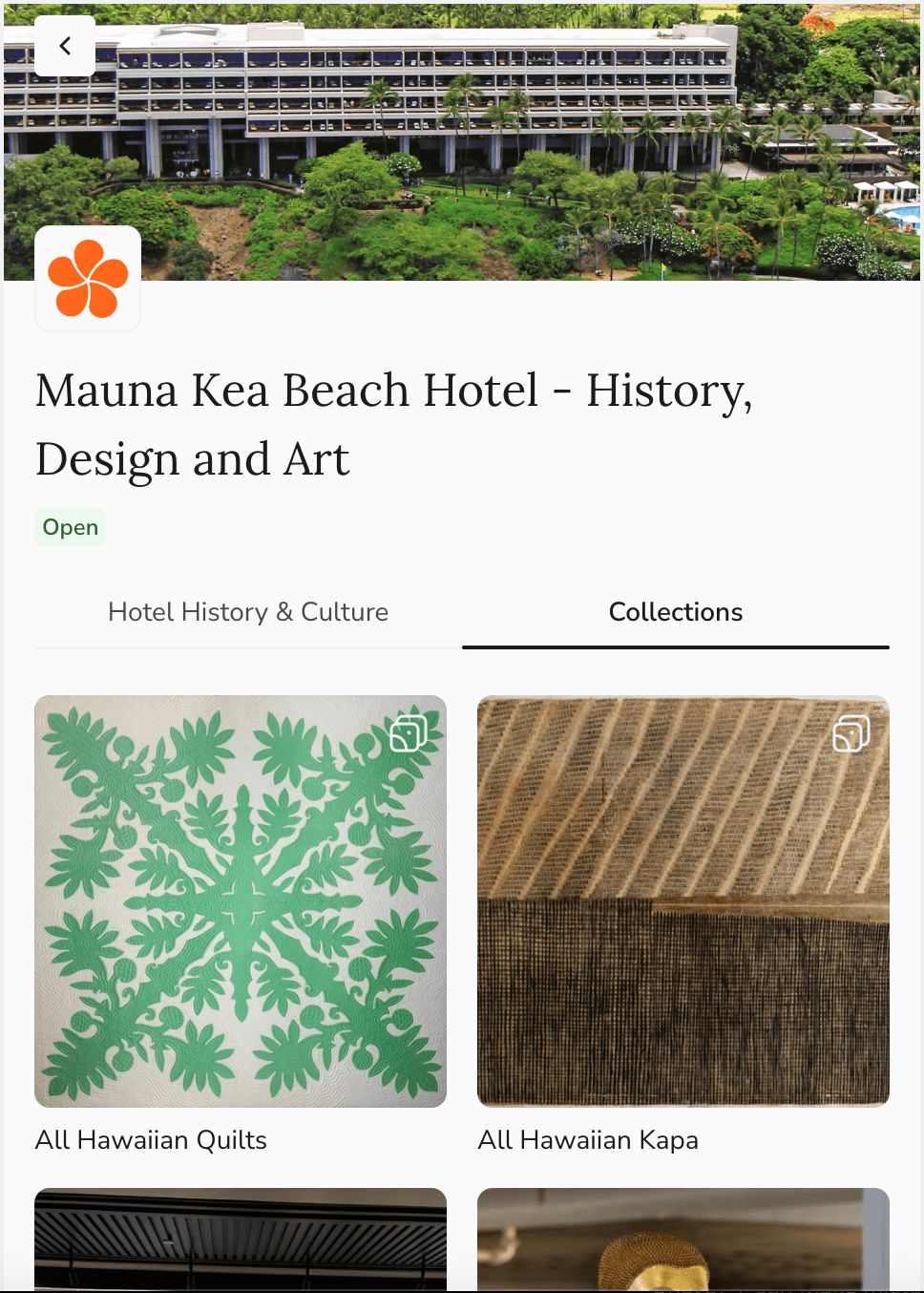
With the collection fully documented, the foundation was finally in place for something the hotel had long envisioned: giving guests a seamless, engaging way to learn about each object. Island Eclectic and the Mauna Kea Beach Hotel selected Smartify, a museum-grade guest engagement platform, and Island Eclectic configured an integration that allows guests to simply point their phone camera at any object and instantly access its full story. This meant there’d be no QR codes or signs to display. Guests simply need to access the hotel’s mobile web app to begin exploring. The connection runs through CatalogIt's API, feeding collection data directly into the Smartify experience in one direction only. "We always wanted CatalogIt to be the single source of truth for the collection," said Charles.
To uplevel the guest’s mobile experience, the Mauna Kea team commissioned professional photography of all the objects. They also curated thematic tours that transformed the breadth of the collection into guided narratives, giving guests a way to move through the hotel with intention—or simply wander and discover its art and artifacts. "Guests can get a drink from Manta Restaurant or the Copper Bar and walk the collection in the evening," Charles recommended. "It's a beautiful thing to do as the sun's going down and you're learning about the hotel’s world-class art collection!"
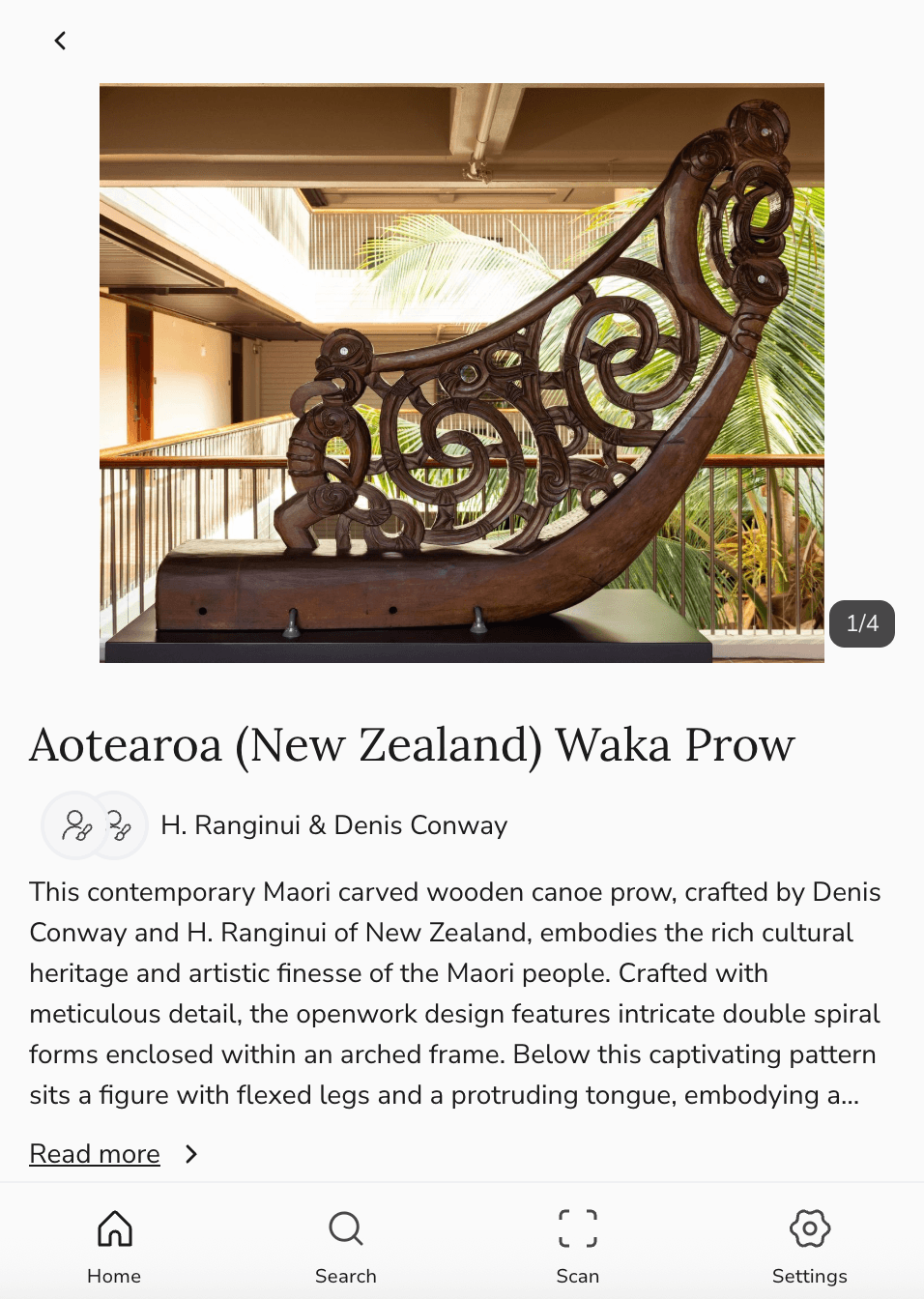
When the hotel’s leadership team reviewed the significantly improved collection experience, the response was overwhelmingly positive. "The team not only loved the newly restored art, but they also loved the fact that the guests had a beautiful and seamless way to engage with it and support Rockefeller's original vision," said Charles. Projected guest engagement with the collection is 12 to 15 percent—a meaningful figure for a property that offers guests such a wide range of amenities and experiences.
Looking ahead, Island Eclectic and the Mauna Kea team plan to continue deepening the work with the collection—identifying metadata gaps, developing curated exhibitions, and building on the foundation now in place. As engagement data accumulates through Smartify, the Mauna Kea Beach Hotel will gain something few heritage properties can claim—measurable evidence of how guests interact with the collection over time. It is a fitting evolution of a vision set in motion more than half a century ago.


